


Doctorado en Estudios Científico Sociales
The program will open in August 2027
ESTE_POSGRADO_DECS_CTA
This graduate program
Develop research and generates new knowledge about inequalities on regional, national and international scales and provides critical reflections from the perspective of the sustainability of life.
CONVOCATORIA_DECS_BECAS_ADM_CTA4-CTA5
Call for applications
Learn moreScholarships and educational support
Learn moreAdmissions
Learn more
Program director
Jorge Federico Eufracio Jaramillo, Ph.D.
He holds a Bachelor's degree in Geography and Land Management from the University of Guadalajara (UdeG), a Master's degree in Regional Studies from El Colegio de Jalisco, and a PhD in Social Science with a specialization in Sociology from El Colegio de México. He is a member of the National System of Researchers, Level 1.
Her research areas are Political Sociology, Political Anthropology, and Political Geography. Her research topics include power and territory, collective political action, social movements, human rights (disabilities and old age), justice, and struggles for recognition.
CUERPO_ACADEMICO_DECS_CTA
Meet the faculty
Reasons to study
this PhD
You enter a university of academic excellence that is considered the most important private institution in the region in the generation of knowledge in Social Sciences.
You gain access to inter-institutional academic cooperation agreements that allow university exchange, research stays, as well as relationships with different research environments.
You receive support from an academic body with national and international recognition, with teachers affiliated with the National System of Researchers (SNII) of the SECIHTI.
A program built for professionals like you
This program is open to professionals who:
- Show interest in understanding the inequalities present in contemporary societies and build a critical perspective from the horizon of the sustainability of life.
- Demonstrate analytical, critical, and reflective skills to sustain academic dialogue and produce quality research.
- They must be willing to integrate into the academic life of the university.
Graduate profile
The graduates will be able to:
- Design, formulate, direct, carry out, communicate and evaluate research projects in social sciences and humanities, in a complex, interdisciplinary and critical manner.
- Maintain a critical stance towards the approaches of social science research, its objects, methodologies and social relevance.
- Account for the different approaches to the study of contemporary inequalities in relation to the sustainability of life.
- Join specialized academic networks, both national and international, in your field of interest.
LIIS_DECS_BL5
The Research and Social Impact Lines (LIIS) are the thematic fields that characterize the program. They bring together the trajectories of professors and students, from a systemic perspective of generating new knowledge.
This doctorate is an interdisciplinary educational program that is linked to the research programs of Economics, Administration and Marketing (DEAM); Sociocultural Studies (DESO); Sociopolitical and Legal Studies (DESOJ); Human Formation (DFH) and the Interdisciplinary Center for Social Formation and Linkage (CIFOVIS).
The thematic lines that group the research of these instances are: Democracy; Rule of law and social transformation; Social care; Environment and territory; Social protection and Social, solidarity economy and social innovation.
DEAM - Department of Economics, Administration and Marketing
Objective of the Research Program
This research project examines some of the problems related to the economic environment, territories, and their implications for the management of micro, small, and medium-sized enterprises (MSMEs). Specifically, the focus of this project is on the business development of MSMEs, the technological, innovative, and entrepreneurial dynamics involved in their management, and their contribution to satisfying human needs, based on consumer behavior and sustainability; taking into account the context of socioeconomic factors that influence the actions of all agents involved in these businesses.
Research Program Lines
- Production structure, labor market and schooling.
- Government-business financing.
- Innovation and entrepreneurship management.
DFH - Department of Human Development
DFiH - Department of Philosophy and Humanities
Objective of the Research Program
The study of the moral dimension of human life focuses on prominent phenomena or features of our social reality: pluralism, inequality, and the rise of a technical or technological culture. Pluralism requires careful study of the development of personal and collective identities, their diverse forms of expression, and the effects these generate. Social inequality demands an analysis of just human coexistence. The presence of a technical and technological culture in the world today necessitates an exploration of the sociocultural transformations it has fostered, transformations that are primarily manifested in the realm of human relations, as well as in its impact on the natural environment we inhabit.
Research Program Lines
- Technique and technology.
- Social pluralism.
- Inequality.
DESO - Department of Sociocultural Studies
Objective of the Research Program
The study of the systems and processes of signification and meaning production through which sociocultural identities are objectively constituted and intersubjectively expressed and developed. Its primary focus is the analysis of sociocultural transformations, and it prioritizes the relationship between social change and continuity from the perspective of meaning production, an essential component of communication.
Research Program Lines
- Communication, knowledge and science.
- Public communication and politics.
- Communication and socio-digital culture.
- Care, gender, and emotions.
- Communication, aesthetics and politics.
DESOJ - Department of Sociopolitical and Legal Studies
Objective of the Research Program
The study of democracy and justice manifests itself in three specific sets of problems: a) justice, law, and social transformation; b) the configuration of violence and human rights; and c) democracy, governance, and public policy. The aim is to understand the scope of each phenomenon, identify some of its causes, and derive possible solutions.
Research Program Lines
- Violence and violation of Human Rights.
- Justice, Law and Social Transformation.
- Democracy, governance and public policies.
CIFOVIS - Interdisciplinary Center for Training and Social Engagement
COINCIDE - University Center for Social Impact
Objective of the Research Program
The study of the social manifestations of inequalities in their economic, political, social, cultural, environmental, territorial, and cognitive dimensions. These inequalities are manifested in disparities in the application of the law, in forms of political participation, in access to public and common goods; in relations between regions, in interaction with nature, in the enjoyment of a healthy environment; between genders, ages, nationalities, and racial origins, and are powerfully intertwined with the economic realities of poverty, marginalization, destitution, and exclusion.
Research Program Lines
- Environmental inequalities.
- Economic inequalities.
- Social inequalities.
- Political inequalities.
Lines of Research and Social Impact
The Research and Social Impact Lines (LIIS) are the thematic fields that characterize the program. They bring together the trajectories of professors and students, from a systemic perspective of generating new knowledge.
This doctorate is an interdisciplinary educational program that is linked to the research programs of Economics, Administration and Marketing (DEAM); Sociocultural Studies (DESO); Sociopolitical and Legal Studies (DESOJ); Human Formation (DFH) and the Interdisciplinary Center for Social Formation and Linkage (CIFOVIS).
The thematic lines that group the research of these instances are: Democracy; Rule of law and social transformation; Social care; Environment and territory; Social protection and Social, solidarity economy and social innovation.
DEAM - Department of Economics, Administration and Marketing
Objective of the Research Program
This research project examines some of the problems related to the economic environment, territories, and their implications for the management of micro, small, and medium-sized enterprises (MSMEs). Specifically, the focus of this project is on the business development of MSMEs, the technological, innovative, and entrepreneurial dynamics involved in their management, and their contribution to satisfying human needs, based on consumer behavior and sustainability; taking into account the context of socioeconomic factors that influence the actions of all agents involved in these businesses.
Research Program Lines
- Production structure, labor market and schooling.
- Government-business financing.
- Innovation and entrepreneurship management.
DFH - Department of Human Development
DFiH - Department of Philosophy and Humanities
Objective of the Research Program
The study of the moral dimension of human life focuses on prominent phenomena or features of our social reality: pluralism, inequality, and the rise of a technical or technological culture. Pluralism requires careful study of the development of personal and collective identities, their diverse forms of expression, and the effects these generate. Social inequality demands an analysis of just human coexistence. The presence of a technical and technological culture in the world today necessitates an exploration of the sociocultural transformations it has fostered, transformations that are primarily manifested in the realm of human relations, as well as in its impact on the natural environment we inhabit.
Research Program Lines
- Technique and technology.
- Social pluralism.
- Inequality.
DESO - Department of Sociocultural Studies
Objective of the Research Program
The study of the systems and processes of signification and meaning production through which sociocultural identities are objectively constituted and intersubjectively expressed and developed. Its primary focus is the analysis of sociocultural transformations, and it prioritizes the relationship between social change and continuity from the perspective of meaning production, an essential component of communication.
Research Program Lines
- Communication, knowledge and science.
- Public communication and politics.
- Communication and socio-digital culture.
- Care, gender, and emotions.
- Communication, aesthetics and politics.
DESOJ - Department of Sociopolitical and Legal Studies
Objective of the Research Program
The study of democracy and justice manifests itself in three specific sets of problems: a) justice, law, and social transformation; b) the configuration of violence and human rights; and c) democracy, governance, and public policy. The aim is to understand the scope of each phenomenon, identify some of its causes, and derive possible solutions.
Research Program Lines
- Violence and violation of Human Rights.
- Justice, Law and Social Transformation.
- Democracy, governance and public policies.
CIFOVIS - Interdisciplinary Center for Training and Social Engagement
COINCIDE - University Center for Social Impact
Objective of the Research Program
The study of the social manifestations of inequalities in their economic, political, social, cultural, environmental, territorial, and cognitive dimensions. These inequalities are manifested in disparities in the application of the law, in forms of political participation, in access to public and common goods; in relations between regions, in interaction with nature, in the enjoyment of a healthy environment; between genders, ages, nationalities, and racial origins, and are powerfully intertwined with the economic realities of poverty, marginalization, destitution, and exclusion.
Research Program Lines
- Environmental inequalities.
- Economic inequalities.
- Social inequalities.
- Political inequalities.
PLAN_DE_ESTUDIOS_DOCTORADO_ESTUDIOS_CIENTIFICOS_CTA
Program Curriculum
EXPERIENCIA_POSGRADO_BT1
ITESO’s graduate programs are supported by a renowned academic faculty comprising leading experts in their fields, who are actively engaged in real-world projects that offer concrete solutions. The university boasts over 100 researchers, 79 of whom are affiliated with Mexico’s National System of Researchers (SNII). Some are also members of the Mexican Academy of Sciences.
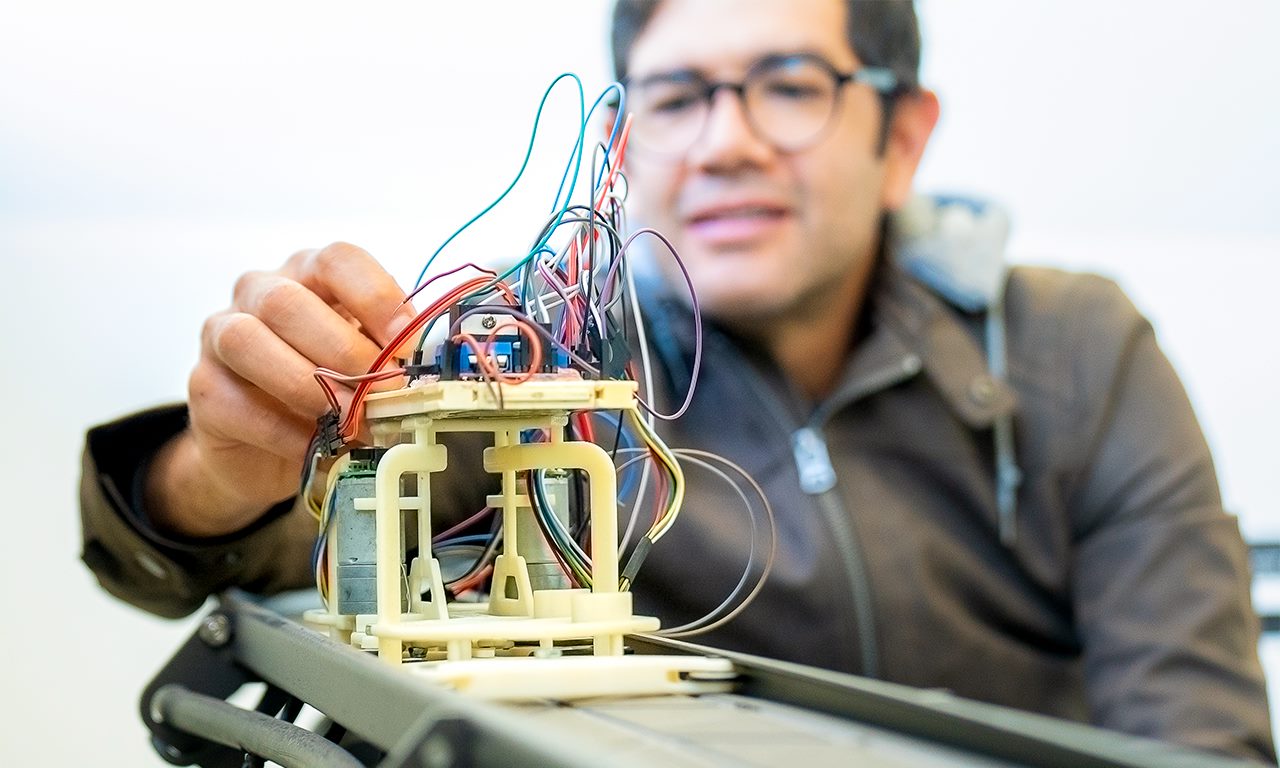
Research at ITESO generates new, rigorous, and relevant knowledge focused on some of the region’s and country’s most pressing challenges. Areas of impact include human rights, access to justice, renewable energy, sustainable resource management, food security, mental health and well-being, quality education, data science, and public communication, among others. These programs aim to offer development alternatives, influence public policy, foster technological innovation, and promote socially impactful projects.

One of the key advantages of ITESO’s graduate programs is the opportunity for international academic exchange through alliances with the International Association of Jesuit Universities (IAJU), a global network of over 320 institutions. Additionally, programs supported by Conacyt offer research stays in Mexico and abroad for fieldwork, study, or the completion of research projects.

Sustainability is an institutional priority that drives research, education, and community engagement projects at ITESO. These initiatives aim to develop comprehensive, long-term strategies for ecosystem stewardship that are in harmony with local communities. ITESO’s campus is one of the most sustainable in the country, and among the few in the world with a protected forest on its grounds.
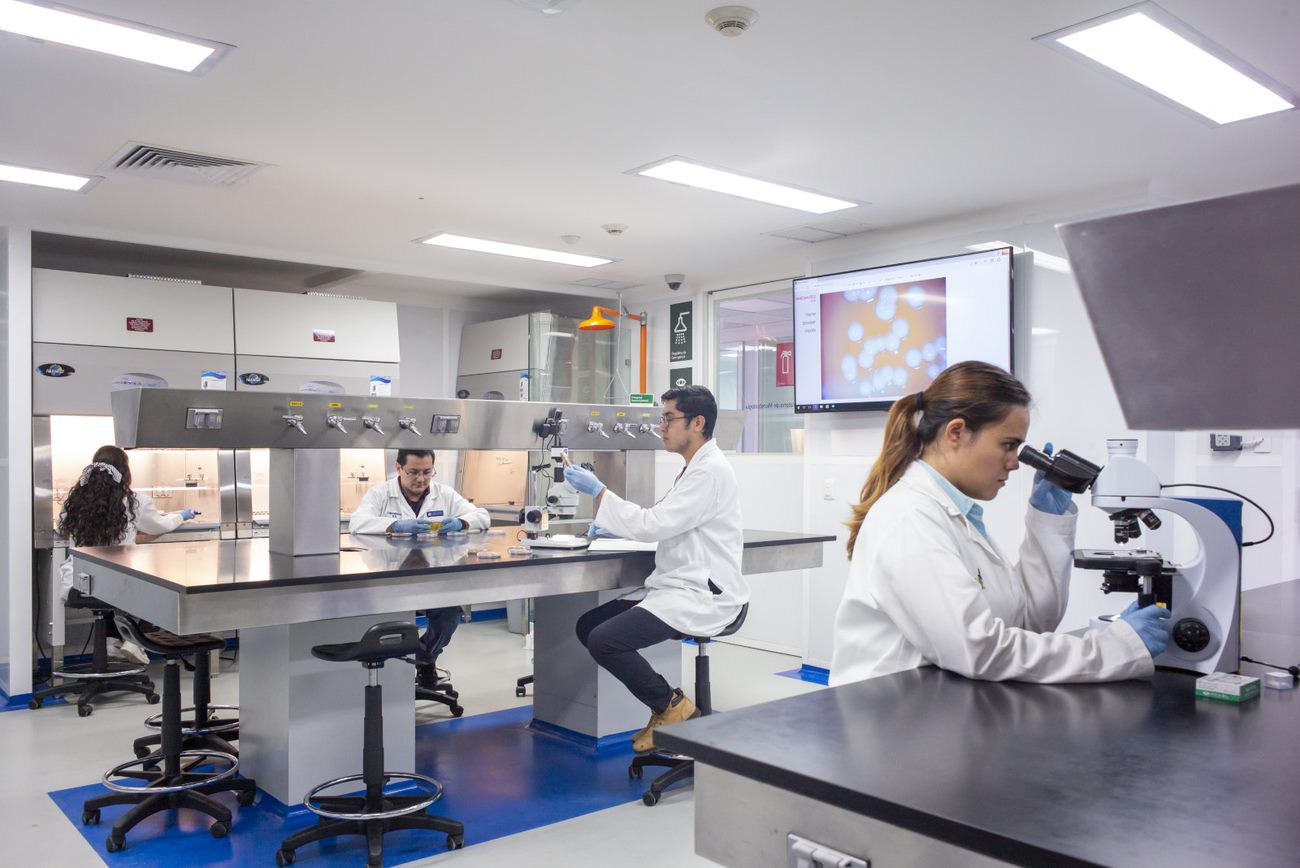
ITESO offers access to more than 100 specialized laboratories in areas such as nanotechnology, data science, food engineering, mechatronics, biotechnology, chemistry, systems, communication, multimedia, languages, nutrition, neuromarketing, arts, building technologies, and more. Facilities also include simulated courtrooms, exhibition spaces, mediation rooms, and audiovisual projection labs.
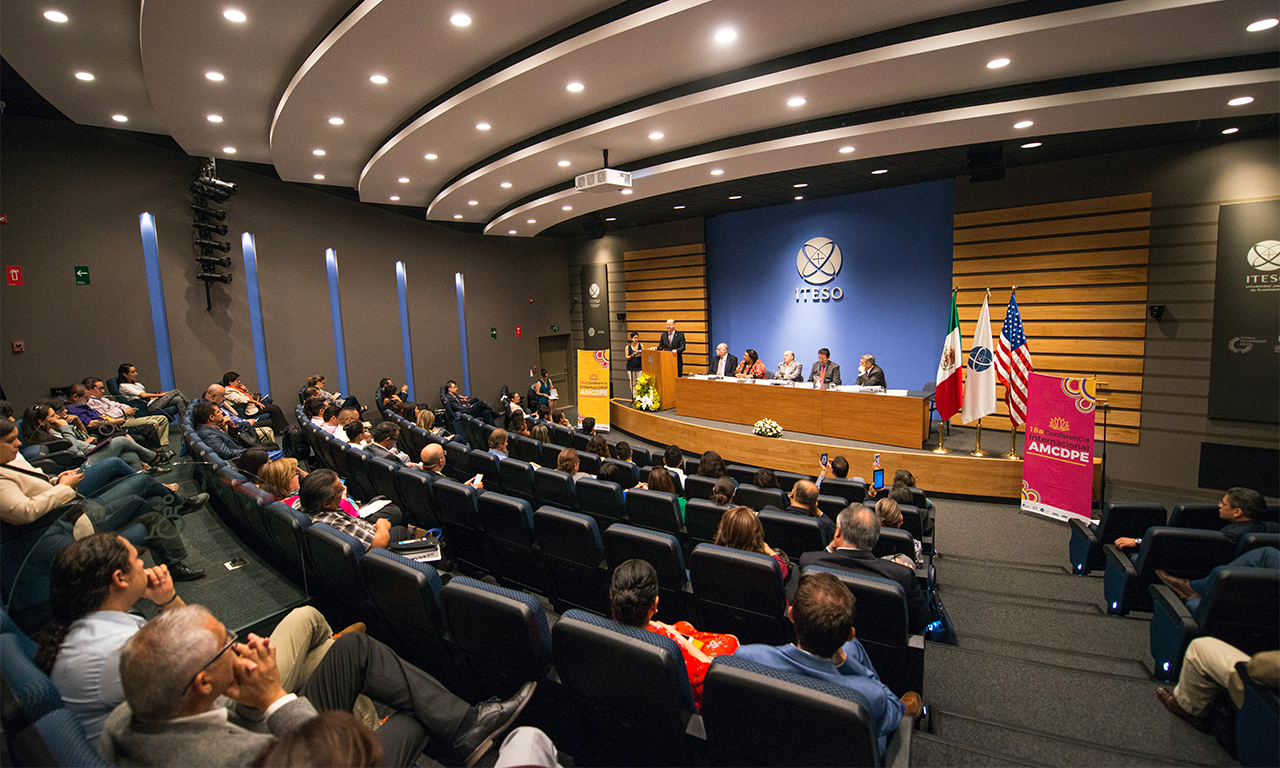
ITESO’s lectures foster dialogue, critical thinking, and the exchange of ideas across sectors. They provide spaces for collaboration between academia, industry, and civil society, aimed at generating knowledge with high social impact. These initiatives also strengthen academic networks and support faculty and student mobility.

With more than 80 active academic journals and a robust catalogue of books, ITESO leads private universities in the region in scholarly publishing. Publications cover diverse disciplines, promote interdisciplinary collaboration, and are widely accessible—many available for free download online.
ITESO holds the most significant number of industry collaboration agreements among private universities in western Mexico. The university also offers dual-degree programs with institutions such as the University of Koblenz (Germany), Boston College, and Central Michigan University (USA).
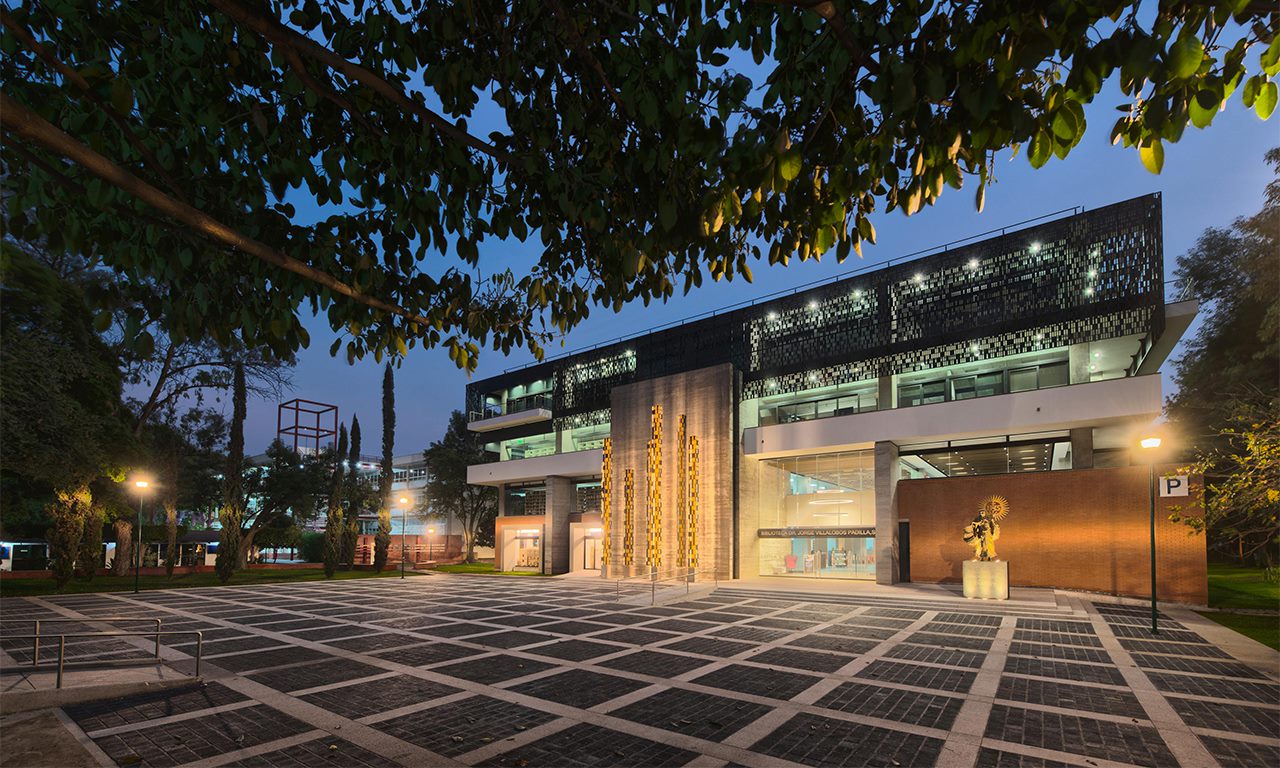
ITESO’s library houses more than 640,000 physical volumes and 200,000 digital resources, including books, journals, blueprints, films, and a collection of rare and antique books. Open to the public, the library features reading rooms, exhibition spaces, a cinema, an agora, a material library, and collaborative workspaces.

ITESO offers expert consulting and support for businesses at all stages of development through the Center for Innovation and Technology Management, the High-Impact Social Innovation Center, and the University-Business Center. Graduate students engage in projects focused on entrepreneurship, innovation, business acceleration, solidarity economies, and fair trade alternatives.
Distinguished faculty
Research programs
Academic mobility
Sustainability
Computer systems
Lectures
Publications
Partnerships
Library
Business & Entrepreneurship
ITESO’s graduate programs are supported by a renowned academic faculty comprising leading experts in their fields, who are actively engaged in real-world projects that offer concrete solutions. The university boasts over 100 researchers, 79 of whom are affiliated with Mexico’s National System of Researchers (SNII). Some are also members of the Mexican Academy of Sciences.
Research at ITESO generates new, rigorous, and relevant knowledge focused on some of the region’s and country’s most pressing challenges. Areas of impact include human rights, access to justice, renewable energy, sustainable resource management, food security, mental health and well-being, quality education, data science, and public communication, among others. These programs aim to offer development alternatives, influence public policy, foster technological innovation, and promote socially impactful projects.
One of the key advantages of ITESO’s graduate programs is the opportunity for international academic exchange through alliances with the International Association of Jesuit Universities (IAJU), a global network of over 320 institutions. Additionally, programs supported by Conacyt offer research stays in Mexico and abroad for fieldwork, study, or the completion of research projects.
Sustainability is an institutional priority that drives research, education, and community engagement projects at ITESO. These initiatives aim to develop comprehensive, long-term strategies for ecosystem stewardship that are in harmony with local communities. ITESO’s campus is one of the most sustainable in the country, and among the few in the world with a protected forest on its grounds.
ITESO offers access to more than 100 specialized laboratories in areas such as nanotechnology, data science, food engineering, mechatronics, biotechnology, chemistry, systems, communication, multimedia, languages, nutrition, neuromarketing, arts, building technologies, and more. Facilities also include simulated courtrooms, exhibition spaces, mediation rooms, and audiovisual projection labs.
ITESO’s lectures foster dialogue, critical thinking, and the exchange of ideas across sectors. They provide spaces for collaboration between academia, industry, and civil society, aimed at generating knowledge with high social impact. These initiatives also strengthen academic networks and support faculty and student mobility.
With more than 80 active academic journals and a robust catalogue of books, ITESO leads private universities in the region in scholarly publishing. Publications cover diverse disciplines, promote interdisciplinary collaboration, and are widely accessible—many available for free download online.
ITESO holds the most significant number of industry collaboration agreements among private universities in western Mexico. The university also offers dual-degree programs with institutions such as the University of Koblenz (Germany), Boston College, and Central Michigan University (USA).
ITESO’s library houses more than 640,000 physical volumes and 200,000 digital resources, including books, journals, blueprints, films, and a collection of rare and antique books. Open to the public, the library features reading rooms, exhibition spaces, a cinema, an agora, a material library, and collaborative workspaces.
ITESO offers expert consulting and support for businesses at all stages of development through the Center for Innovation and Technology Management, the High-Impact Social Innovation Center, and the University-Business Center. Graduate students engage in projects focused on entrepreneurship, innovation, business acceleration, solidarity economies, and fair trade alternatives.
INVESTIGACION_ITESO_GENERALES_POSGRADOS_TESTIMONIO
Research at ITESO
“Universities are called to be places of possibilities — to open horizons through research and engagement”.
Arturo Sosa, SJ
ACTIVIDADES_DECS_BC6
Noticias
Asset Publisher
OTROS_POSGRADOS_TITULO_GENERALES_POSGRADOS_BL3
Other graduate programs you may be interested in