

ESTE_POSGRADO_DIE_CTA

This graduate program

Develop original, high-quality knowledge with a socially committed perspective, contributing to the development of policies and models for the continuous improvement of the quality of education.

LEARN MORE

CONVOCATORIA_DIE_BECAS_ADM_CTA4-5

Call for applications

LEAR MORE

Scholarships & Financial Support

LEAR MORE

Admissions

LEAR MORE
iteso

Program director

Yasmani Santana Colin, Ph.D.
With a PhD in Latin American Studies from the National Autonomous University of Mexico (UNAM), he completed postdoctoral fellowships at the Institute for Educational Development Research (INIDE) at the Ibero-American University in Mexico City and at the Institute of Educational Research at the University of Veracruz. He is a member of the National System of Researchers. Currently, he is a research professor at the Western Institute of Technology and Higher Education (ITESO) and editor of the journal Sinéctica in Education. His research interests include: access to university for Indigenous youth, the relationship between Indigenous communities and professionals, affirmative action programs, differentiated pedagogies, Indigenous intellectuals and academic training, intercultural education, and contemporary ethnographies, among others.

iteso
iteso

Contact information:


33 3669-3434, ext. 3452
doctoradoeducacion@iteso.mx


CUERPO_ACADEMICO_DIE_CTA

Academic staff

Reasons to study

this PhD


You are enrolled in an inter-institutional program whose academic body is made up of specialists in education and research from ITESO and the Ibero universities in Mexico City, León and Puebla, belonging to the Jesuit University System in Mexico.


You study in a blended learning format that promotes meaningful learning through individual work, tutoring, participation in assessment seminars and intensive classes.


You will be trained as a specialist in generating knowledge about learning, education, and the conditions that promote its development.

A program built for professionals like you

Imagen mobile
This doctorate program is open to professionals who:
  • They have a bachelor's or master's degree in the fields of education, social sciences or humanities.
  • Show a desire to promote and improve the quality of education in Mexico and Latin America.
  • They share an interest in investigating educational problems from an ethical and committed perspective.
  • Have prior experience in research.
  • Applicants must be available to dedicate full time to the program, and have the discipline to engage in intellectual work for extended periods.
  • They possess knowledge in educational theories, learning, curriculum, etc.
  • They have developed skills in social and educational research methodology.
  • Be familiar with the topics covered in the Knowledge Generation and Application Lines of the program, as described in the call for applications.
Graduate profile
Imagen mobile
Upon completion of this doctorate you will be able to:
  • Develop research projects independently.
  • Design and develop research projects with solid theoretical and technical foundations, and whose methodology is consistent with the problem to be addressed.
  • Lead research projects in your field of expertise in accordance with the research lines offered by the program.
  • To provide useful information for decision-making related to educational processes, programs, systems, and policies.
  • To generate new interpretations or explanations about an educational problem.
  • Transmit and disseminate your knowledge and provide technical or specialized advice.

Career Opportunities

  • Research projects on a national and international scale.
  • Teaching and research in higher education.
  • Specialized publishing products.
  • Civil society organizations.
  • Public policy development.
  • Management of educational institutions.

LGAC_DIE_BL5

The Lines of Knowledge Generation and Application (LGAC) are the thematic fields that characterize the program. They bring together the research or professional work trajectories of professors and students, from a systemic perspective of generating new knowledge or applying it, according to its nature and approach.

The following are the lines and sub-lines of this doctorate.

The characteristics, implementation and results of the policies implemented at different levels of government in relation to the development of the education system and its impact on the social environment are analyzed.

a) Educational policies and social justice.
It focuses on the analysis of management and leadership processes within the Education System, aiming to achieve greater social impact and a more just society. Specifically, it examines decision-making for public action to address social and educational inequalities among vulnerable and excluded populations; the design, implementation, results, and impacts of public action; the political and governance processes of the Education System and its constituent institutions; and affirmative action strategies for educational and social inclusion, targeting populations living in poverty, marginalization, and segregation.

b) Education for the integral development of the country.
It focuses on phenomena within formal and non-formal education, with educational intentions that have a direct impact on the community and, on a broader scale, on the country. These include: lifelong learning; education, citizenship, and democratic political development; education and sustainability; and education and scientific and technological development. The common denominator is the focus on formative interactions between individuals and their communities, centered on improving their living conditions.

c) Education, work and poverty.
This study focuses on initiatives by educational, governmental, and civil institutions to offer training and skills development opportunities for young people and adults, as well as their effects on productive inclusion and poverty reduction in rural, suburban, and urban-marginal areas. It also examines, from the perspective of the economics of education, the labor market integration and employability of secondary and higher education graduates. This includes analyses of the relationship between schooling and improved living conditions, in terms of the private and social benefits of education, particularly in contexts of poverty and vulnerability.

The aim is to develop educational proposals designed to provide students with a well-rounded education through diverse pedagogical approaches to the social and value-based aspects, which will significantly impact civil society, with the goal of building more participatory and democratic societies.

a) Education and diversity.
Studies are considered on educational conditions that promote or hinder multiculturalism and interculturalism, especially those related to socioeconomically vulnerable groups: indigenous communities, native peoples, migrants, displaced persons, migrant farmworkers, and street children and youth, among others. This includes studies on addressing cultural diversity, gender diversity, educational inclusion, and school coexistence.

b) Practices of education actors.
On the one hand, it focuses on the psycho-pedagogical analysis and understanding of the practices of school stakeholders—students, teachers, and administrators—and how these practices influence teaching and learning processes. On the other hand, it studies three types of practices: the relationships between schools and families, as well as joint actions aimed at learning; the links between educational institutions and the communities in which they are located; and innovative educational practices. This sub-line includes works that address the use and integration of Information and Communication Technologies (ICTs) in education and the analysis of educational change resulting from the incorporation of new approaches.

c) Non-formal and community education.
It focuses on non-formal educational processes organized around explicit educational purposes, whose value lies primarily in their political and democratizing nature. It also includes studies that critically analyze community-based social experiences involving the recovery of traditional knowledge transmission methods and situated learning, particularly within Indigenous communities, as well as communities of practice in productive and professional settings that are not affiliated with a formal institution.

d) Evaluation of educational processes.
This refers to the study of the theory, techniques, and instruments for evaluating learning and teaching, as a component of educational assessment. This sub-line includes research on micro-evaluations, that is, on the attributes of educational actors, such as the evaluation of teaching practice, management and leadership, and learning.

Its purpose is to analyze the dimensions and possibilities of the curriculum as a central element that shapes, organizes, and significantly influences the outcome of educational processes. It addresses the study of pedagogical and communication relationships between teachers and students in the educational environment.

a) Educational philosophy.
Consider empirically based studies on the axiological, ethical, deontological, teleological, and epistemological dimensions of education; for example, studies on: integral training, ethics in teaching, commitment to justice, social responsibility, as well as the aims of education and the educational system.

b) Curriculum design, management and evaluation.
It considers research on curriculum theories, models, development, and evaluation. This includes work aimed at generating knowledge about the process of conceptualizing, implementing, and evaluating curricular proposals for their eventual transformation. It also includes research on models and strategies for evaluating educational projects and curricular projects.

c) Pedagogical interactions.
This study analyzes the interactions between learners, teachers, methods, and content within a curricular context. It generates knowledge about the forms these interactions take and the characteristics of each participant in relation to achieving educational objectives. The role of social-emotional learning in these relationships is highlighted.

Lines of Knowledge Generation and Application

The Lines of Knowledge Generation and Application (LGAC) are the thematic fields that characterize the program. They bring together the research or professional work trajectories of professors and students, from a systemic perspective of generating new knowledge or applying it, according to its nature and approach.

The following are the lines and sub-lines of this doctorate.

The characteristics, implementation and results of the policies implemented at different levels of government in relation to the development of the education system and its impact on the social environment are analyzed.

a) Educational policies and social justice.
It focuses on the analysis of management and leadership processes within the Education System, aiming to achieve greater social impact and a more just society. Specifically, it examines decision-making for public action to address social and educational inequalities among vulnerable and excluded populations; the design, implementation, results, and impacts of public action; the political and governance processes of the Education System and its constituent institutions; and affirmative action strategies for educational and social inclusion, targeting populations living in poverty, marginalization, and segregation.

b) Education for the integral development of the country.
It focuses on phenomena within formal and non-formal education, with educational intentions that have a direct impact on the community and, on a broader scale, on the country. These include: lifelong learning; education, citizenship, and democratic political development; education and sustainability; and education and scientific and technological development. The common denominator is the focus on formative interactions between individuals and their communities, centered on improving their living conditions.

c) Education, work and poverty.
This study focuses on initiatives by educational, governmental, and civil institutions to offer training and skills development opportunities for young people and adults, as well as their effects on productive inclusion and poverty reduction in rural, suburban, and urban-marginal areas. It also examines, from the perspective of the economics of education, the labor market integration and employability of secondary and higher education graduates. This includes analyses of the relationship between schooling and improved living conditions, in terms of the private and social benefits of education, particularly in contexts of poverty and vulnerability.

The aim is to develop educational proposals designed to provide students with a well-rounded education through diverse pedagogical approaches to the social and value-based aspects, which will significantly impact civil society, with the goal of building more participatory and democratic societies.

a) Education and diversity.
Studies are considered on educational conditions that promote or hinder multiculturalism and interculturalism, especially those related to socioeconomically vulnerable groups: indigenous communities, native peoples, migrants, displaced persons, migrant farmworkers, and street children and youth, among others. This includes studies on addressing cultural diversity, gender diversity, educational inclusion, and school coexistence.

b) Practices of education actors.
On the one hand, it focuses on the psycho-pedagogical analysis and understanding of the practices of school stakeholders—students, teachers, and administrators—and how these practices influence teaching and learning processes. On the other hand, it studies three types of practices: the relationships between schools and families, as well as joint actions aimed at learning; the links between educational institutions and the communities in which they are located; and innovative educational practices. This sub-line includes works that address the use and integration of Information and Communication Technologies (ICTs) in education and the analysis of educational change resulting from the incorporation of new approaches.

c) Non-formal and community education.
It focuses on non-formal educational processes organized around explicit educational purposes, whose value lies primarily in their political and democratizing nature. It also includes studies that critically analyze community-based social experiences involving the recovery of traditional knowledge transmission methods and situated learning, particularly within Indigenous communities, as well as communities of practice in productive and professional settings that are not affiliated with a formal institution.

d) Evaluation of educational processes.
This refers to the study of the theory, techniques, and instruments for evaluating learning and teaching, as a component of educational assessment. This sub-line includes research on micro-evaluations, that is, on the attributes of educational actors, such as the evaluation of teaching practice, management and leadership, and learning.

Its purpose is to analyze the dimensions and possibilities of the curriculum as a central element that shapes, organizes, and significantly influences the outcome of educational processes. It addresses the study of pedagogical and communication relationships between teachers and students in the educational environment.

a) Educational philosophy.
Consider empirically based studies on the axiological, ethical, deontological, teleological, and epistemological dimensions of education; for example, studies on: integral training, ethics in teaching, commitment to justice, social responsibility, as well as the aims of education and the educational system.

b) Curriculum design, management and evaluation.
It considers research on curriculum theories, models, development, and evaluation. This includes work aimed at generating knowledge about the process of conceptualizing, implementing, and evaluating curricular proposals for their eventual transformation. It also includes research on models and strategies for evaluating educational projects and curricular projects.

c) Pedagogical interactions.
This study analyzes the interactions between learners, teachers, methods, and content within a curricular context. It generates knowledge about the forms these interactions take and the characteristics of each participant in relation to achieving educational objectives. The role of social-emotional learning in these relationships is highlighted.

PLAN_DE_ESTUDIOS_DOCTORADO_INTERINSTICIONAL_EDUCACION_CTA

EXPERIENCIA_POSGRADO_BT1

A Rich Graduate Experience

ITESO’s graduate programs are supported by a renowned academic faculty comprising leading experts in their fields, who are actively engaged in real-world projects that offer concrete solutions. The university boasts over 100 researchers, 79 of whom are affiliated with Mexico’s National System of Researchers (SNII). Some are also members of the Mexican Academy of Sciences.
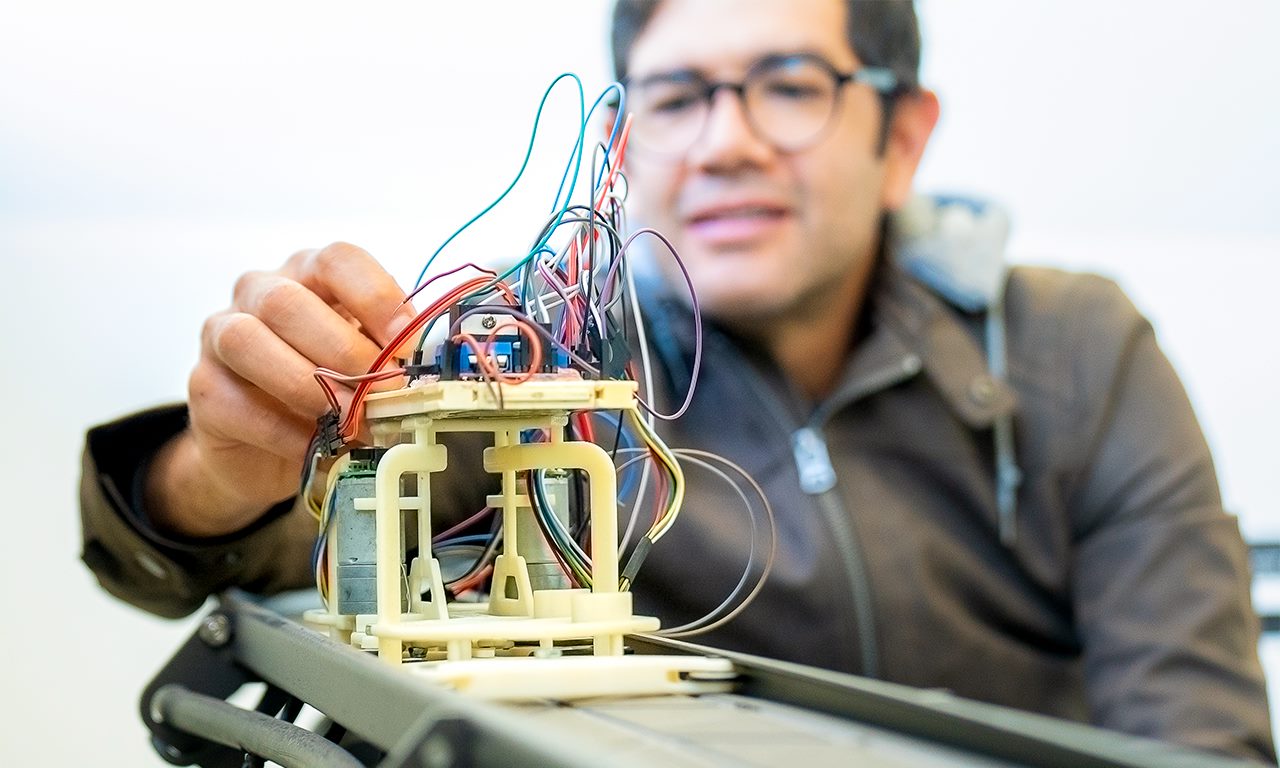
Research at ITESO generates new, rigorous, and relevant knowledge focused on some of the region’s and country’s most pressing challenges. Areas of impact include human rights, access to justice, renewable energy, sustainable resource management, food security, mental health and well-being, quality education, data science, and public communication, among others. These programs aim to offer development alternatives, influence public policy, foster technological innovation, and promote socially impactful projects.

One of the key advantages of ITESO’s graduate programs is the opportunity for international academic exchange through alliances with the International Association of Jesuit Universities (IAJU), a global network of over 320 institutions. Additionally, programs supported by Conacyt offer research stays in Mexico and abroad for fieldwork, study, or the completion of research projects.

Sustainability is an institutional priority that drives research, education, and community engagement projects at ITESO. These initiatives aim to develop comprehensive, long-term strategies for ecosystem stewardship that are in harmony with local communities. ITESO’s campus is one of the most sustainable in the country, and among the few in the world with a protected forest on its grounds.
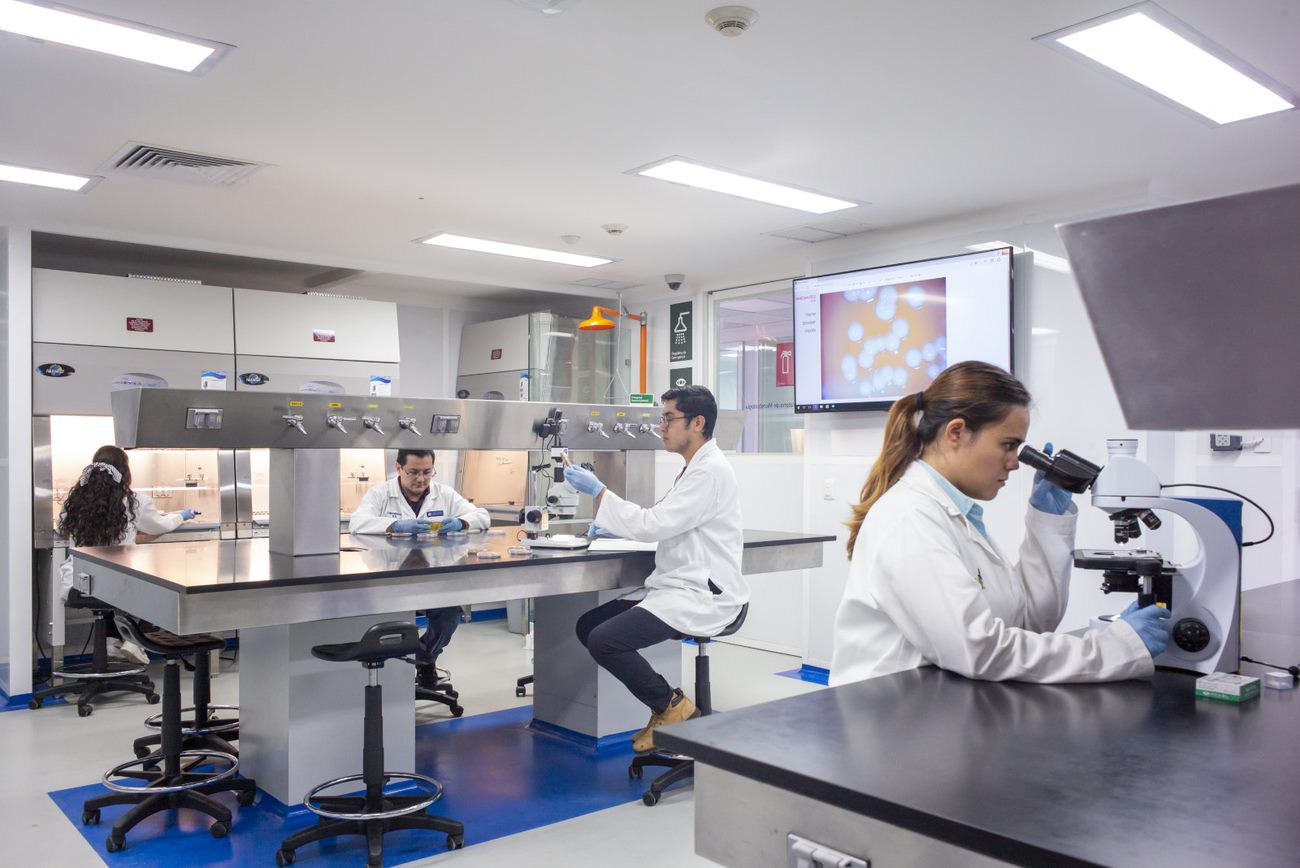
ITESO offers access to more than 100 specialized laboratories in areas such as nanotechnology, data science, food engineering, mechatronics, biotechnology, chemistry, systems, communication, multimedia, languages, nutrition, neuromarketing, arts, building technologies, and more. Facilities also include simulated courtrooms, exhibition spaces, mediation rooms, and audiovisual projection labs.
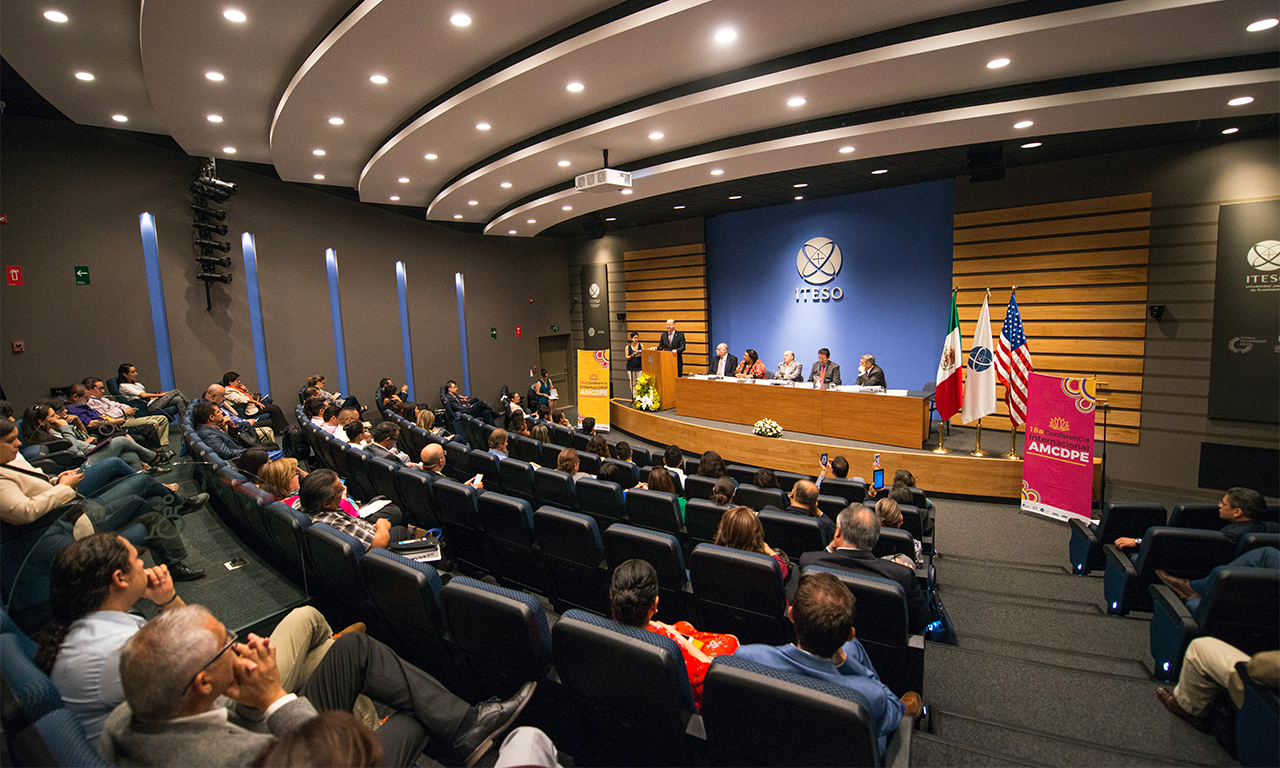
ITESO’s lectures foster dialogue, critical thinking, and the exchange of ideas across sectors. They provide spaces for collaboration between academia, industry, and civil society, aimed at generating knowledge with high social impact. These initiatives also strengthen academic networks and support faculty and student mobility.
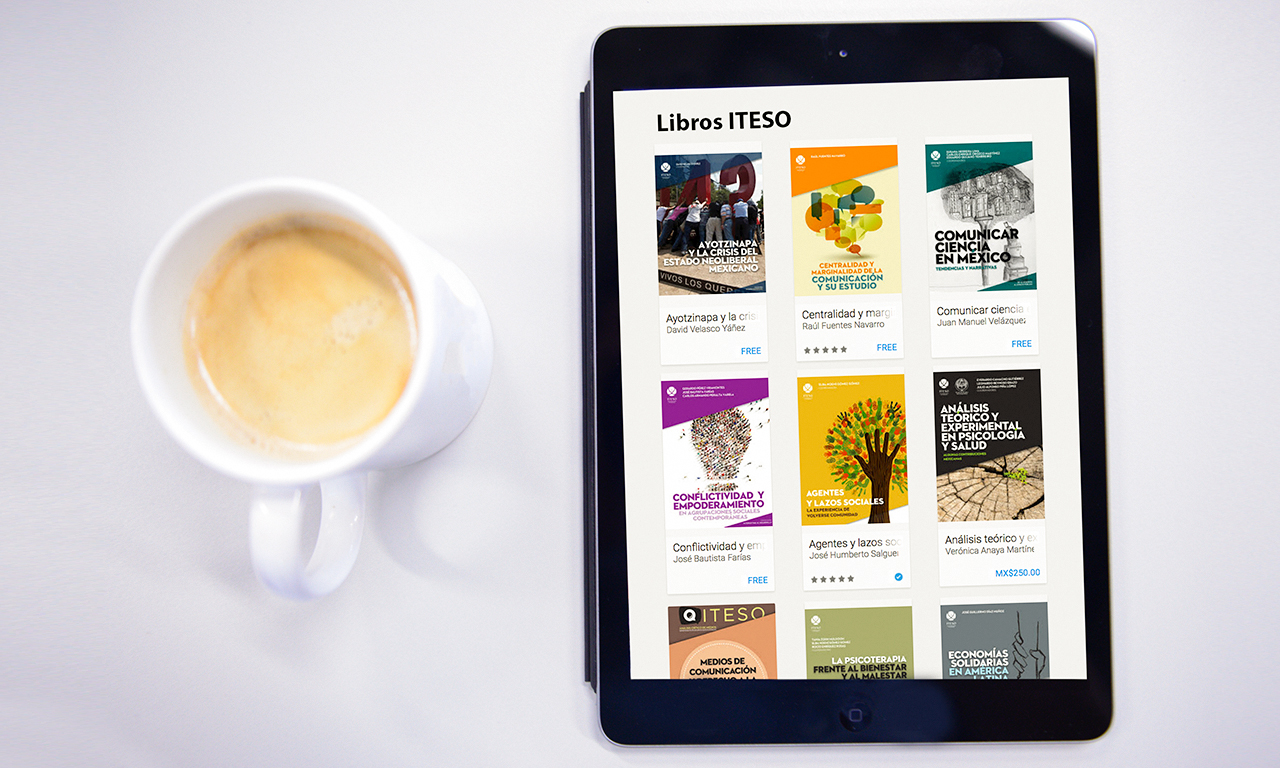
With more than 80 active academic journals and a robust catalogue of books, ITESO leads private universities in the region in scholarly publishing. Publications cover diverse disciplines, promote interdisciplinary collaboration, and are widely accessible—many available for free download online.

ITESO holds the most significant number of industry collaboration agreements among private universities in western Mexico. The university also offers dual-degree programs with institutions such as the University of Koblenz (Germany), Boston College, and Central Michigan University (USA).
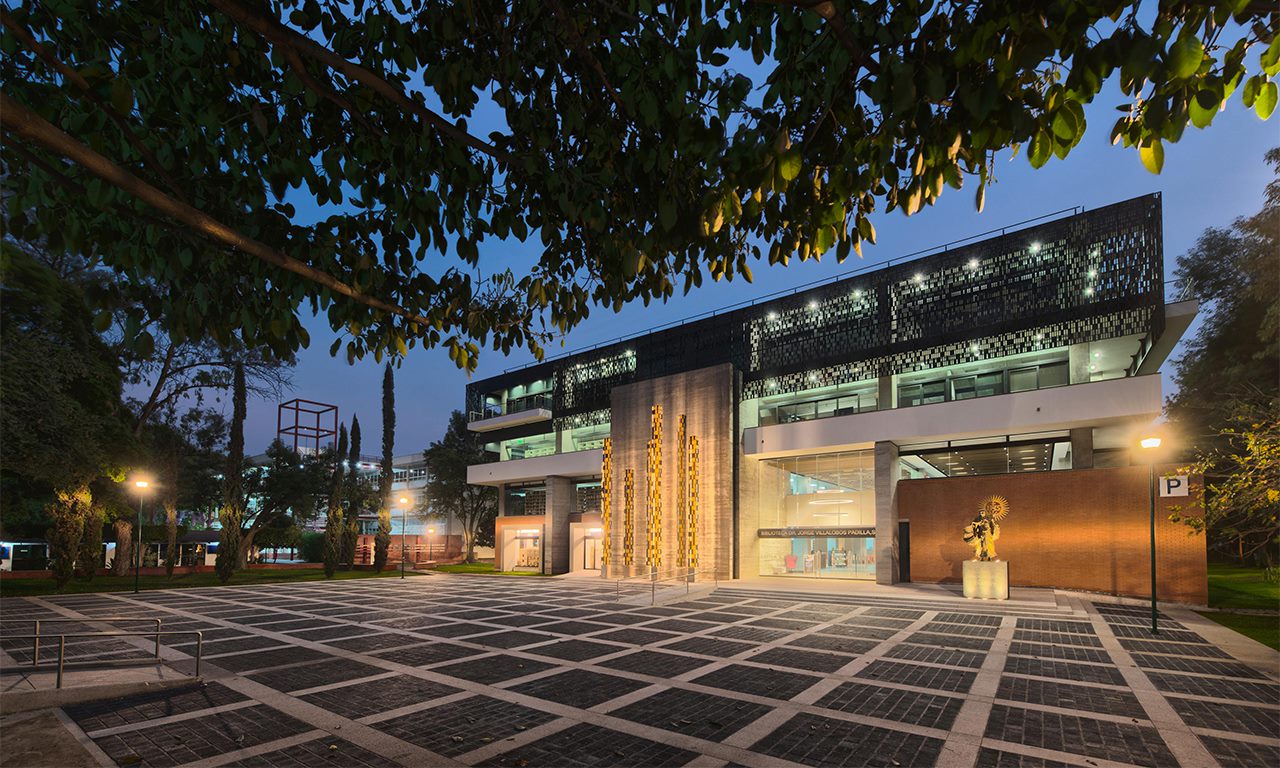
ITESO’s library houses more than 640,000 physical volumes and 200,000 digital resources, including books, journals, blueprints, films, and a collection of rare and antique books. Open to the public, the library features reading rooms, exhibition spaces, a cinema, an agora, a material library, and collaborative workspaces.

ITESO offers expert consulting and support for businesses at all stages of development through the Center for Innovation and Technology Management, the High-Impact Social Innovation Center, and the University-Business Center. Graduate students engage in projects focused on entrepreneurship, innovation, business acceleration, solidarity economies, and fair trade alternatives.

ITESO’s graduate programs are supported by a renowned academic faculty comprising leading experts in their fields, who are actively engaged in real-world projects that offer concrete solutions. The university boasts over 100 researchers, 79 of whom are affiliated with Mexico’s National System of Researchers (SNII). Some are also members of the Mexican Academy of Sciences.

Research at ITESO generates new, rigorous, and relevant knowledge focused on some of the region’s and country’s most pressing challenges. Areas of impact include human rights, access to justice, renewable energy, sustainable resource management, food security, mental health and well-being, quality education, data science, and public communication, among others. These programs aim to offer development alternatives, influence public policy, foster technological innovation, and promote socially impactful projects.

One of the key advantages of ITESO’s graduate programs is the opportunity for international academic exchange through alliances with the International Association of Jesuit Universities (IAJU), a global network of over 320 institutions. Additionally, programs supported by Conacyt offer research stays in Mexico and abroad for fieldwork, study, or the completion of research projects.

Sustainability is an institutional priority that drives research, education, and community engagement projects at ITESO. These initiatives aim to develop comprehensive, long-term strategies for ecosystem stewardship that are in harmony with local communities. ITESO’s campus is one of the most sustainable in the country, and among the few in the world with a protected forest on its grounds.

ITESO offers access to more than 100 specialized laboratories in areas such as nanotechnology, data science, food engineering, mechatronics, biotechnology, chemistry, systems, communication, multimedia, languages, nutrition, neuromarketing, arts, building technologies, and more. Facilities also include simulated courtrooms, exhibition spaces, mediation rooms, and audiovisual projection labs.

ITESO’s lectures foster dialogue, critical thinking, and the exchange of ideas across sectors. They provide spaces for collaboration between academia, industry, and civil society, aimed at generating knowledge with high social impact. These initiatives also strengthen academic networks and support faculty and student mobility.

With more than 80 active academic journals and a robust catalogue of books, ITESO leads private universities in the region in scholarly publishing. Publications cover diverse disciplines, promote interdisciplinary collaboration, and are widely accessible—many available for free download online.

ITESO holds the most significant number of industry collaboration agreements among private universities in western Mexico. The university also offers dual-degree programs with institutions such as the University of Koblenz (Germany), Boston College, and Central Michigan University (USA).

ITESO’s library houses more than 640,000 physical volumes and 200,000 digital resources, including books, journals, blueprints, films, and a collection of rare and antique books. Open to the public, the library features reading rooms, exhibition spaces, a cinema, an agora, a material library, and collaborative workspaces.

ITESO offers expert consulting and support for businesses at all stages of development through the Center for Innovation and Technology Management, the High-Impact Social Innovation Center, and the University-Business Center. Graduate students engage in projects focused on entrepreneurship, innovation, business acceleration, solidarity economies, and fair trade alternatives.

INVESTIGACION_ITESO_GENERALES_POSGRADOS_TESTIMONIO

Research at ITESO

“Universities are called to be places of possibilities — to open horizons through research and engagement”.

Arturo Sosa, SJ


ACTIVIDADES_DIE_BC6

Activities

RECONOCIMIENTOS_Y_ACREDITACIONES_GENERALES_POSGRADOS_CTA4-5

Accreditations

MORE

Graduate regulations

MORE

ITESO Graduate programs on Social Media

Noticias

Asset Publisher

OTROS_POSGRADOS_TITULO_GENERALES_POSGRADOS_BL3

Other graduate programs you may be interested in

OTROS_POSGRADOS_DIE_CTA4-5

PhD in Social Sciences

VER MÁS

Master's Degree in Education and Coexistence

VER MÁS

Master's Degree in Communication and Culture

VER MÁS
Request information

Get the detailed information you need to decide if this graduate program is right for you.

I agree with the privacy policies